A recent study was done with the goal to correlate subjective opinion to objective metrics. A variety of cars were observed for subjective perception and measured for the key metrics. While many metrics were considered, the most significant improvement in correlation was achieved by including this additional new feature to the equation. The correlation jumped from an initial 45% up to a 75% match. A significant improvement without the need for any additional tools or special operations.
Background
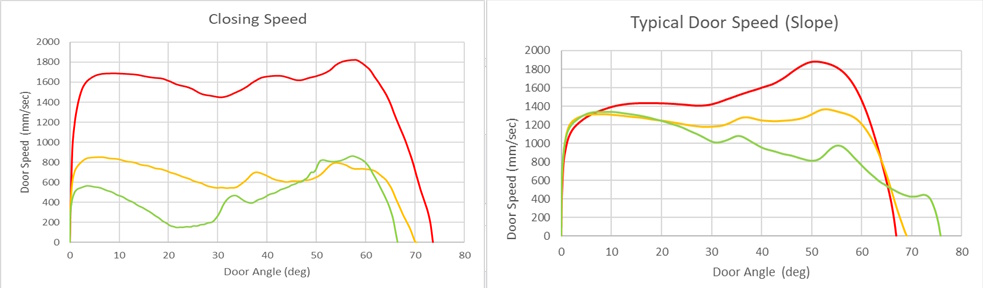
It is not uncommon that some doors, despite an acceptable closing speed, feel sluggish while travelling over the check. These doors tend to come to a slow stop or end up in a detent position. This type of door, generally referred to as check dominant doors, can score good on speed only evaluations. However, the perceived quality is often poor. The above speed graphs for a few doors illustrate the potential low and high closing speed but also illustrate how doors with identical speed might feel completely different when compared to the initial speed.
Friction
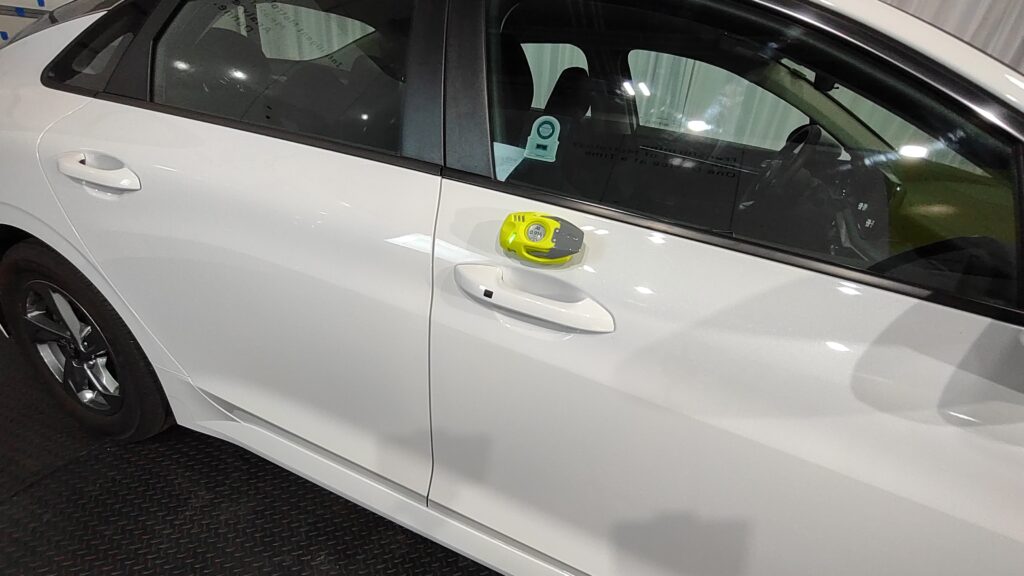
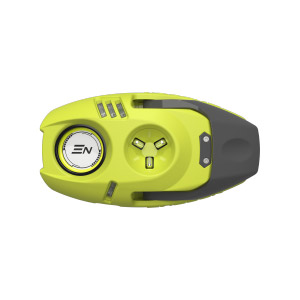
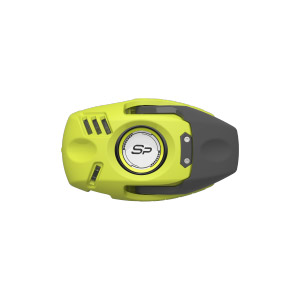
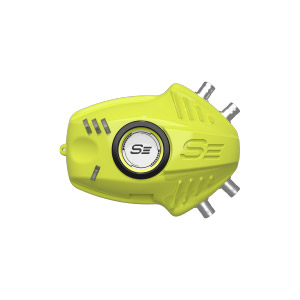
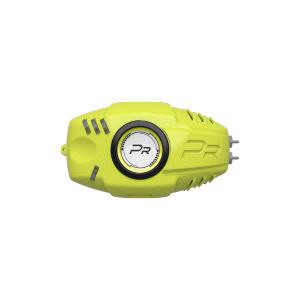
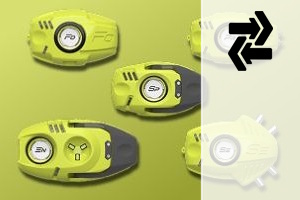
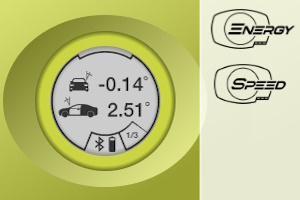
The new SpeedPod and EnergyPod can both report Friction. From an academic perspective, there might be an objection to the name as it does obviously not only include friction. The term refers to the loss or gain of kinetic energy during travelling. From the open position, the door will start at a given speed and as it is travelling, the door will lose some of that kinetic energy, eventually closing with a different speed. Multiple effects such as hinge tip, door weight, door check, hinges will all play a role in the effect. A given door design should have a consistent friction value. A significant change is an obvious sign of a potential issue in the assembly and a consequent change in quality.